OVERVIEW
To dramatically boost your bird photo experience in Ecuador, welcome to the exploration of our privileged Amazon rainforest. While the Amazon basin falls within several South American countries, a singularity occurs in Ecuador's Amazonia. The Equator line, the Andes mountain range, and, our lush Amazon territory blend together to give place to the most bio-diverse ecosystem in the Western Hemisphere. Brace yourself for a bird photography trip jam-packed with unique bird species.
 Canopy towers make it possible to observe and photograph macaws, toucans, contingas, tanagers, and mokey troops of several species. © Jorge Luis Cruz Alcivar
Our second chapter takes us to Ecuador's Lower Amazon basin (Amazon lowlands), acknowledged as the most biologically diverse spot on earth, and one of the most spectacular places for bird photography. This region stretches from 800m (2600ft) all the way down to 300m (980ft) and its made up of soaring millennial trees, magical flooded forests, glassy oxbow lakes, and, the islands of the meandering Napo river. A whole new world of raptors, antbirds, toucans, barbets, cotingas, tanagers, and many more await us in the Amazon jungle of Ecuador!
FOR OUR 5 DAY UPPER AMAZON BIRD PHOTO TOUR CLICK HERE!
DAY 1
Bird Photo BRAND NEW! San Jorge Sumaco Bajo Wildlife Reserve:
In the morning we'll start photographing from our sensational observation tower rising at 40 meters (130 ft). Photography of canopy birds will be easy with 360 degree view
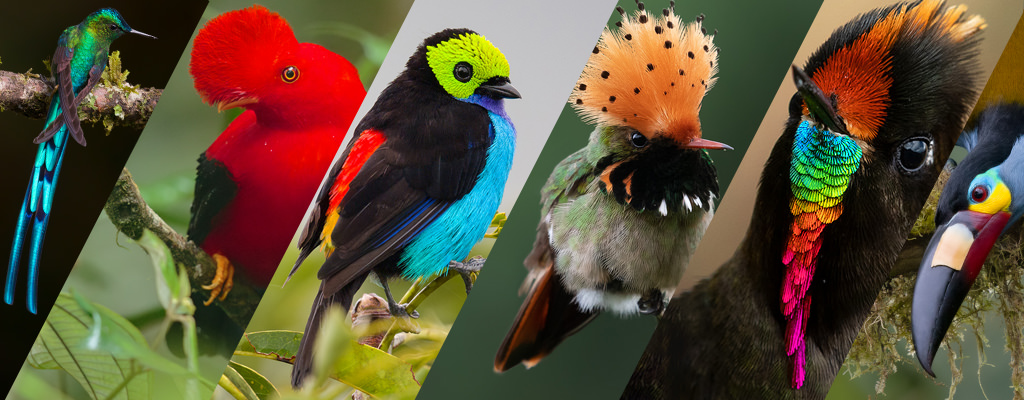
 of the upper level of the forest, we'll look out for fantastic bird species including the Cream-colored Woodpecker, Chestnut-eared Aracari, Yellow-bellied Dacnis, Opal-crowned Tanager, Masked Tanager, Paradise Tanager, Turquoise Tanager, Crested Oropendola, Spangled Cotinga, Long-billed Woodcreeper, Red-throated Caracara, Chestnut-fronted Macaw, Black-bellied Cuckoo, and many others. On sunny days, we can photograph troops of Red Howler-Monkeys that like to rest in the canopy.
 One of the most exhilarating moments of the trip will be when we photograph the stunning Paradise Tanager atop our Sumaco Bajo canopy tower! © George Cruz
We arrive for lunch at our open-air restaurant to then continue our photography trip around the eco-lodge's pond and lagoon. We'll photograph the Greater Ani, Amazon Kingfisher, Ringed Kingfisher,  Capped Heron, Olive Oropendola, Black-capped Donacobius, Orange-backed Troupial, Masked Crimson Tanager, Crimson-crested Woodpecker, and with a bit of luck the Rufous-headed Woodpecker, Flame-crested Tanager, and, the Yellow-backed Tanager. At around 3:00PM we'll return to canopy tower as during this time its easier to photograph the White-throated Toucan, Yellow-tufted Woddpecker, Golden-collared Toucanet, Letered Aracari, Magpie Tanager, Scale-breasted Woodpecker, Violaceous Jay, Opal-rumped Tanager, and, many more!
Overnight: Loreto Eco-lodge.
DAY 2
Bird Photo Coca Oxbow Lake:
After breakfast we drive for two hours to Coca Amazon Oxbow Lake and do bird photography with the help of a wide motor canoe. We'll slowly photograph along the edges of this massive lagoon crowded with wildlife. One of the target birds for this place includes the bizzare unicorn bird (Horned Screamer) which is fairly common to photograph here but very rare elsewhere. We'll also do photography of several other birds including,
 Rufescent Tiger-Heron, Agami Heron, Least Bittern, White-eared Jacamar, Wattled Jacana, Azure Gallinule, Ecuadorian Cacique, Scarlet-crowned Barbet, Red-capped Cardinal, Hoatzin, Snail Kite, Yellow-headed Caracara, White-fronted Nunbird, Rufous-and-green Kingfisher, Laughing Falcon, and many other lagoon-specialist bird species. Several mokey species can also be photograph along the lagoon's edge including the the Squirrel Monkey and, the world's smallest monkey species, the Pygmy Marmoset.
 Oxbow Lakes are home to unique bird species that will hardly be seen elsewhere © George Cruz
In the mid-afternoon we'll drive to Napo's riverbank and catch a motor boat that will take us to our eco-lodge in the heart of the Amazon. We'll make little stops along the Napo river to photograph the Brown Jacamar, Swallow-winged Puffbird, White-winged Swallow, White-banded Swallow, Greater Yellow-headed Vulture, Pied Lapwing, Ladder-tailed Nightjar, Oriole Blackbird, Casqued Cacique, Long-tailed Potoo, and with some luck the Amazonian Umbrellabird.
Overnight: Amazonia Eco-lodge.
DAY 3
Bird Photo Parrot & Macaw Photography Hide & Amazon Canopy Towers:
We'll start the day with bird photography atop another fabulous canopy tower rising at 60 meter (195 feet). Waves of birds will suddenly appear and sit next to us. Possible bird species include, Bare-necked Fruitcrow, Great Jacamar, Purple-throated Fruitcrow, Many-banded Aracari, Ivory-billed Aracari, Red-necked Woodpecker, Golden-green Woodpecker, Pink-throated Becard, Black-faced Dacnis, Cinnamon-throated Woodcreeper, Slate-colored Hawk, White-browed Purpletuft, Black-tailed Trogon, Wire-tailed Manakin, White-necked Puffbird, Pied Puffbird, Chestnut Woodpecker, Gilded Barbet, Lemon-throated Barbet, and many more. We'll also enjoy the bizarre sounds of monkeys and other wildlife that will emerge from the never-ending Amazon jungle.
 The Scarlet Macaws enjoy the fresh spring water in the heart of the Amazon Jungle. © Jorge Luis Cruz Alcivar
After another superb chapter of bird photography atop the higher stratum of the forest, we'll start walking to a fabulous parrot/macaw photography hide.  On warm days, massive flocks of Cobalt-winged Parakeets, Orange-cheeked Parrots, and Scarlet-shouldered Parrotlets descend to get fresh spring water from a little stream right in front of our photography hide. Scarlet Macaws will also descend to quench their thirst, sometimes up to 16 individuals at once! We'll have our boxed lunch inside the photography hide as we wait for this amazing show. White-lipped Peccaries, Spider Monkeys, and even the mighty Jaguar have been spotted in this photo hide in broad daylight. In the mid-afternoon we'll visit another canopy tower to enjoy another wave of amazing wildlife.
Overnight: Amazonia Eco-lodge.
DAY 4
Bird Photo Amazon Parrot Clay Lick & Amazon Canopy Towers:
After breakfast we'll use our motor boat to navigate down the Napo river and get close to the Parrot Clay Lick. Here, we'll look out for very large flocks of Orange-winged Parrots,  Yellow-crowned Parrots,
 Red-bellied Macaw, Dusky-billed Parrotlet, Dusky-headed Parakeet, and Blue-headed Parrot feeding on the clay wall. Next, we'll visit another canopy tower where the following species are easier to photograph, Gilded Barbet, Black-headed Parrot, Yellow-browed Tody-Flycatcher, Purple-throated Fruitcrow, Spangled Cotinga, Plum-throated Cotinga, Purplish Jacamar, Blue-and-Yellow Macaw, and with some luck the Harpy or Crested Eagle. After lunch we begin our motor ride back to Loreto.
Overnight: Loreto Eco-lodge
 Hundreds of parrots, parakeets, and, parrotlets gather at the parrot clay lick. © Jorge Luis Cruz Alcivar
DAY 5
San Jorge Sumaco Bajo Canopy Tower & return to Quito City:
On the last day we'll revisit San Jorge Sumaco Bajo's canopy tower. After lunch we start our return to Quito city.
Overnight: N/A - 5:00-to-5:30PM drop-off at any hotel in Quito city/airport.
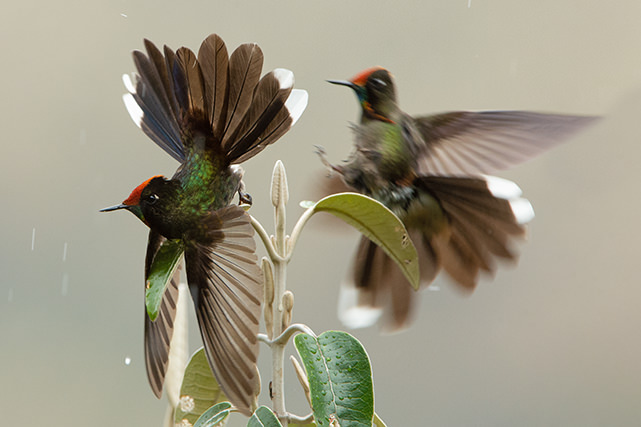 Our upper Amazonia trip visits the best location to see the fabulous Rainbow-bearded Thornbill © Jorge Luis Cruz Alcivar
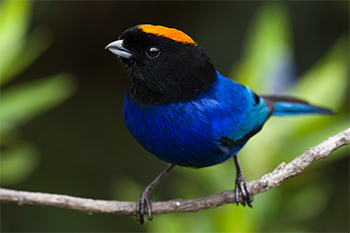 deep-green foothill forests, and, crystal clear rivers that feed into the largest tributary of the Amazon river. This region is exceptionally good for bird photography for its highly sought-after mountain-toucans, mountain-tanagers, fruiteaters, tanagers, jays, caciques, antbirds, and, notably, for its abounding hummingbird species, most of which don't occur in the Choco slope (5 & 8 day trips). This region is unfortunately missed by most bird photographers, who, unknowingly skip this must-see! wildlife photography area by flying directly from Quito to Coca city into the Lower Amazon which we offer as a separate trip.
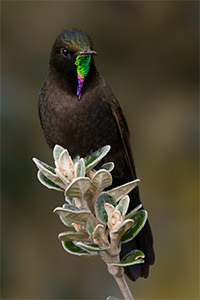 Some of Ecuador's most stunning hummingbird species inhabit this stunning treeline forest. This will be one of the best locations to photograph the majestic
  Rainbow-bearded Thornbill, Blue-mantled Thornbill, and a second chance at the Ecuadorian Hillstar. Other great bird species we'll photograph at this location include the Rufous-bellied Seedsnipe, Giant Conebill, Many-striped Canastero, Andean Tit-Spinetail, and with a bit of luck, the mighty Spectacled Bear, South America's only bear species. At around noon, we'll be rewarded with a delicious boxed lunch surrounded by a sublime Andean landscape.
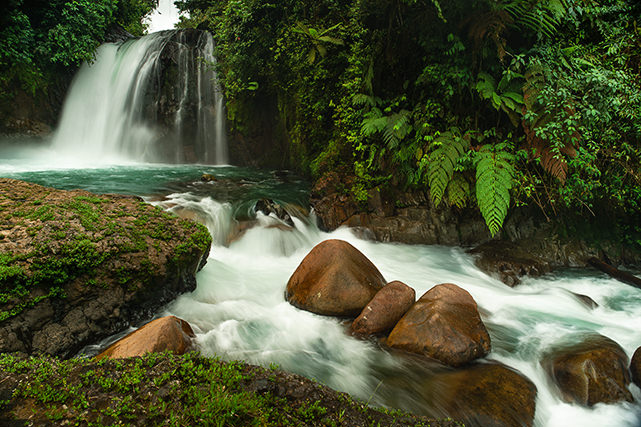 Be enchanted by the breathtaking scenery of the Upper Amazon region. © Jorge Luis Cruz Alcivar
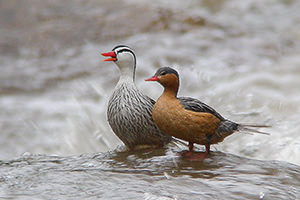 Black-backed Bush-Tanager, Pale-naped Brush-Finch, Crowned Chat-Tyrant, and, the stunners Pluscap, and Golden-crowned Tanager. After Cayambe Coca, we descend to Cuyuja river and we spend the rest of the afternoon doing hummingbird photography of brand new species including the Chestnut-breasted Coronet, Collared Inca, Glowing Pufleg, and, Tourmaline Sunangel. We'll also go after the Torrent Duck that's commonly seen along the Cuyuja river. With a bit of luck we might also photograph the Red-hooded Tanager, Grey-breasted Mountain-Toucan, and the Andean Potoo.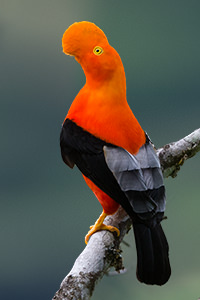
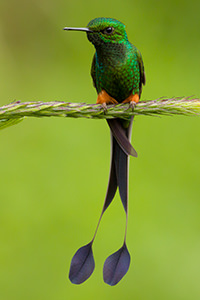 Long-taild Sylph, Green-backed Hillstar, Tawny-bellied Hermit, Speckled Hummingbird, Bronzy Inca, Rufous-booted Racket-tail, Violet-fronted Brilliant, and the Tiny Gorgeted Woodstar. Other birds that visit the bird feeders at this valley include, Bronze-green Euphonia, Red-breasted Meadowlark, Spot-breasted Woodpecker, Northern Mountain-Cacique, Scarlet-rumped Cacique, Andean Motmot, Turquoise Jay, and, Inca Jay. At the eco-lodge we'll also check the little ponds and the river for the stunning Sunbittern, and, a second chance at the Torrent Duck. In addition, during one afternoon, we'll visit a lek to do photography of the eastern Andean Cock-of-the-rock which has an amazing orange color and a piercing bright yellow eye.
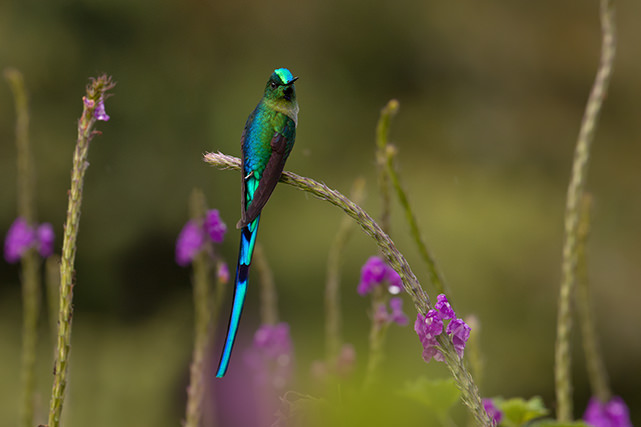 The valley of Baeza is home to some of the most beautiful hummingbird species including this Long-tailed Sylph. © Jorge Luis Cruz Alcivar
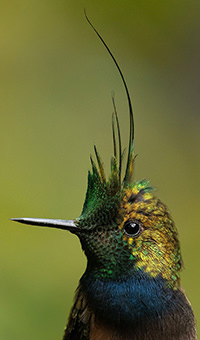 We'll focus on hummingbird photography of the following species, the iconic Wire-crested Throntail, Violet-headed Hummingbird, Rufous-throated Sapphire, Napo Sabrewing, Rufous-vented Whitetip, Black-throated Brilliant, Fork-tailed Woodnymph,
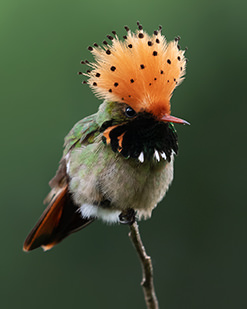 Black-throated Brilliant, Gould's Jewelfront, Blue-fronted Lancebill, Green Hermit, Ecuadorian Piedtail, Pink-throated Brilliant, and, with a bit of luck, the amazing Spangled Coquette. After having a delicious boxed lunch we continue exploring the reserve for other birds including the Black-chested Fruiteater, Black-streaked Puffbird, Lafresnaye's Piculet, White-crowned Manakin, Coppery-chested Jacamar, Spotted Tanager, Orange-breasted Falcon, and the endangered Military Macaw.
 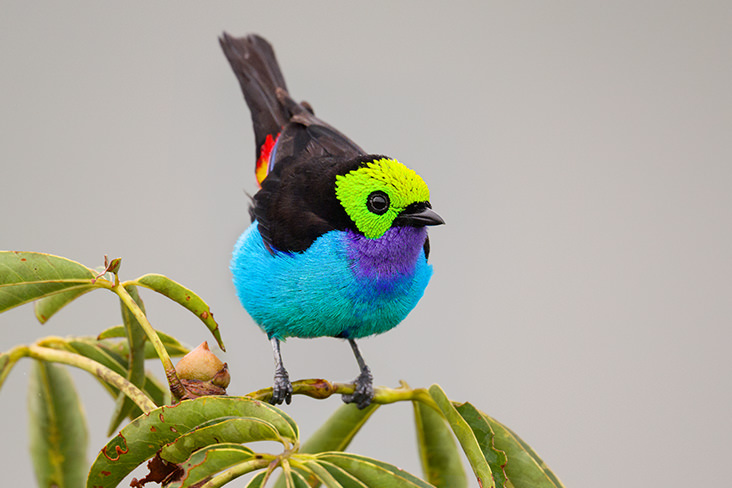 The crown jewel of Ecuador's tanagers, the Paradise Tanager perches gracefully atop Sumaco Bajo's canopy tower. © Jorge Luis Cruz Alcivar
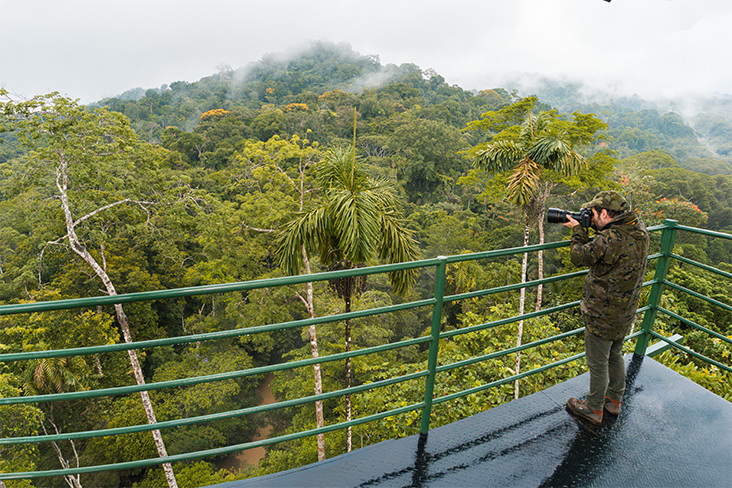 Rising above the rainforest canopy, Sumaco Bajo's observation tower provides an extraordinary perspective for photographing stunning canopy specialists at eye level—an experience rarely possible from the forest floor. © Jorge Luis Cruz Alcivar
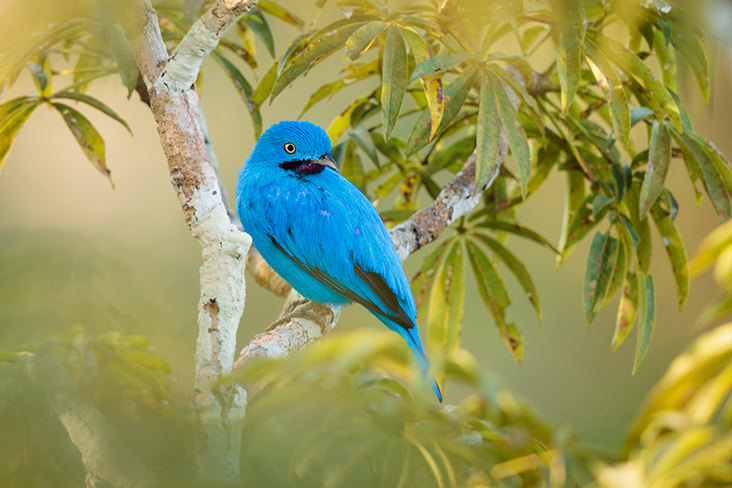 The magnificent Plum-throated Cotinga ranks among Sumaco Bajo's canopy tower's most coveted photography subjects, rewarding photographers with unforgettable eye-level views of one of the Amazon's most spectacular canopy birds. © Jorge Luis Cruz Alcivar
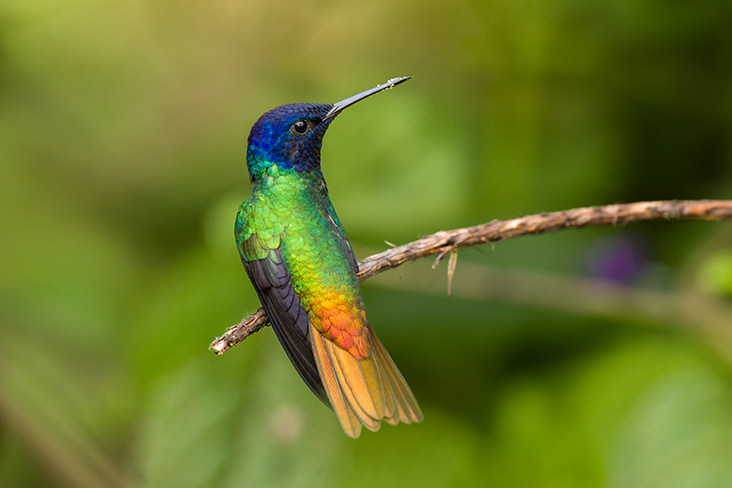 Drawn to the lodge's flourishing flowering gardens, the radiant Golden-tailed Sapphire is a frequent visitor, offering unforgettable opportunities to photograph its shimmering jewel-like colors. © Jorge Luis Cruz Alcivar
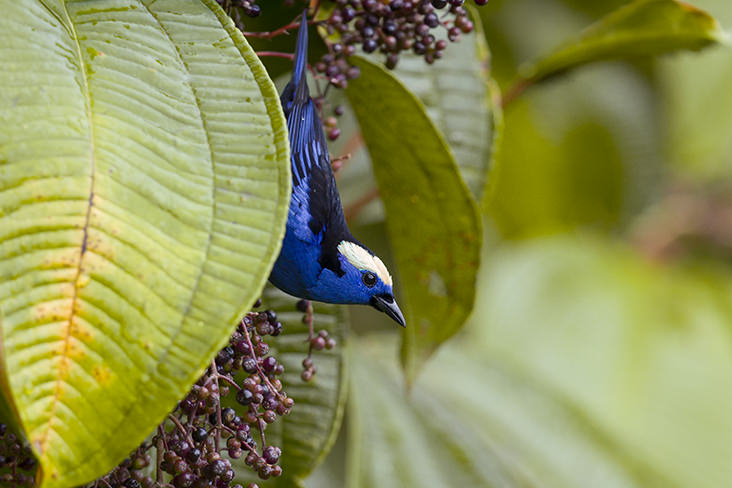 The lodge's fruiting trees draw an impressive array of colorful tanagers, with the elegant Opal-crowned Tanager among the most rewarding species to photograph. © Jorge Luis Cruz Alcivar
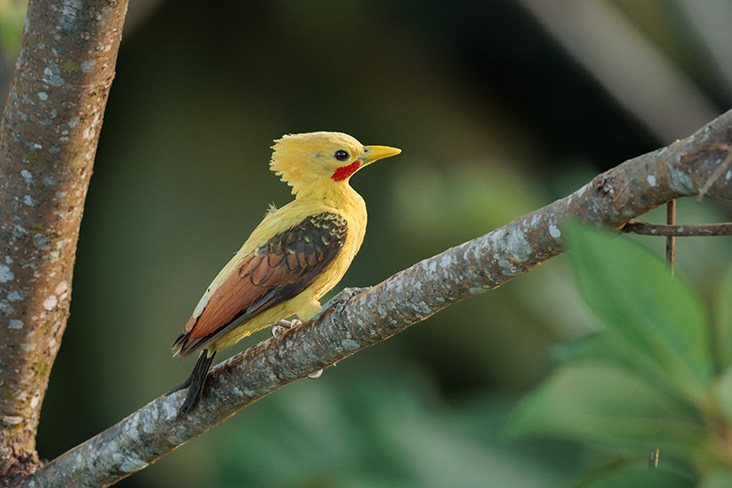 As the sun begins to set, the beautiful Cream-colored Woodpecker enjoys the day's final golden light atop Sumaco Bajo's canopy tower. © Jorge Luis Cruz Alcivar
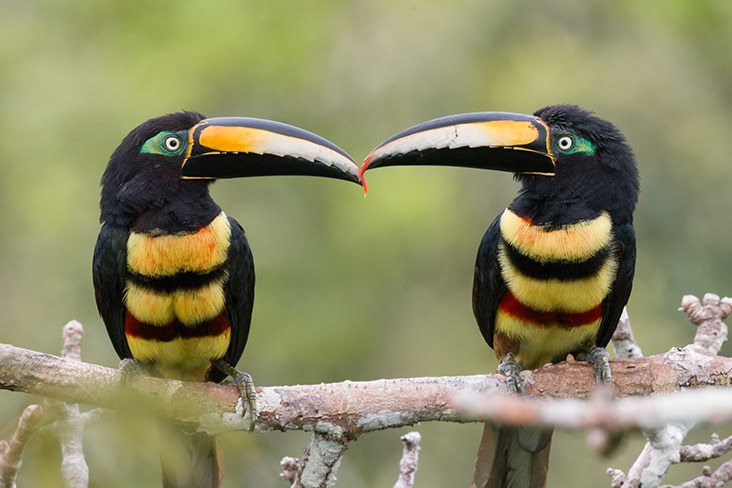 A pair of Many-banded Aracaris touch beaks as the day fades over the deep emerald canopy of the Ecuadorian Amazon. © Jorge Luis Cruz Alcivar
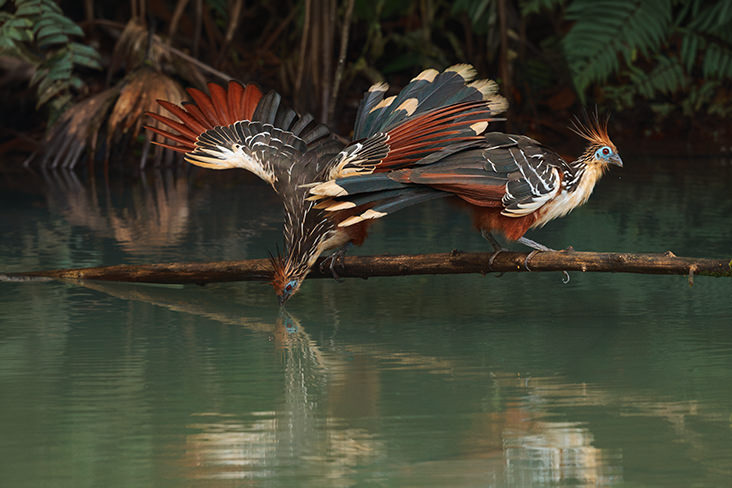 After warm, sunny mornings, the prehistoric-looking Hoatzin often emerges from the riverside vegetation to quench its thirst at Sacha Cocha Lagoon. © Jorge Luis Cruz Alcivar
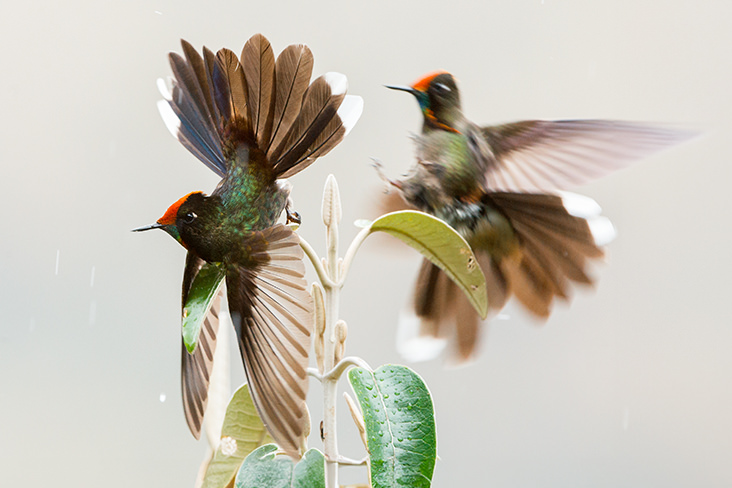 Our upper Amazonia trip visits the best location to see the fabulous Rainbow-bearded Thornbill © Jorge Luis Cruz Alcivar
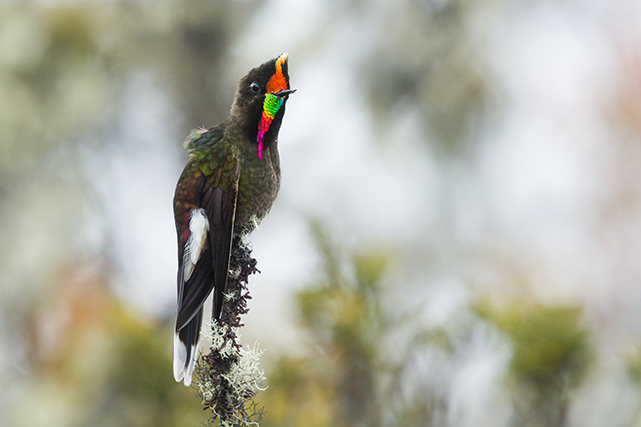 The first day alone may yield three thornbill species, crowned by the majestic Rainbow-bearded Thornbill. © Jorge Luis Cruz Alcivar
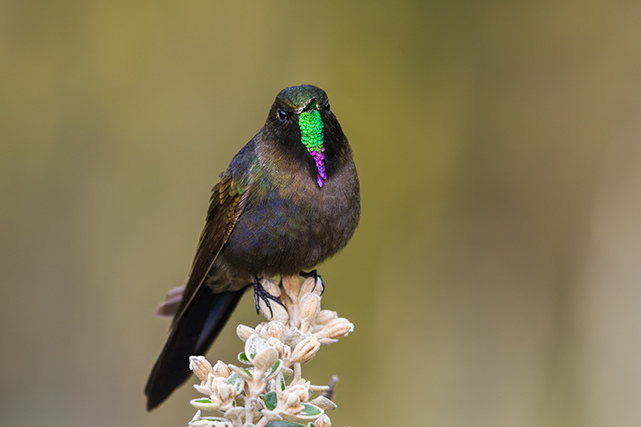 The Blue-mantled Thornbill captivates all with its exquisite, two-toned “tie,” a tiny flourish of elegance that never fails to enchant © Jorge Luis Cruz Alcivar
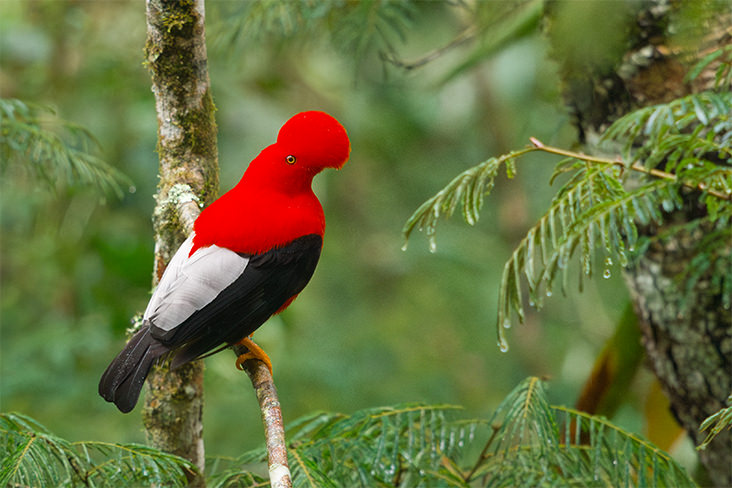 After the lek falls silent, fruiting trees and lush bushes around the observation decks of San Jorge Eco-lodge Guacamayos draw the vibrant Andean Cock-of-the-rock. © Jorge Luis Cruz Alcivar
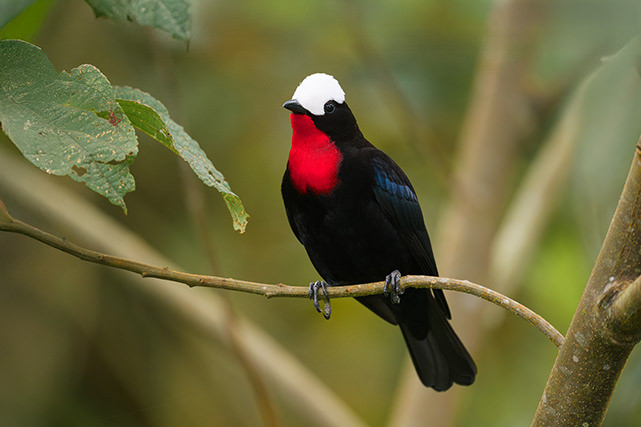 Among Guacamayos’ most charismatic birds, the White-capped Tanager is known for its colorful plumage and lively flock behavior. © Jorge Luis Cruz Alcivar
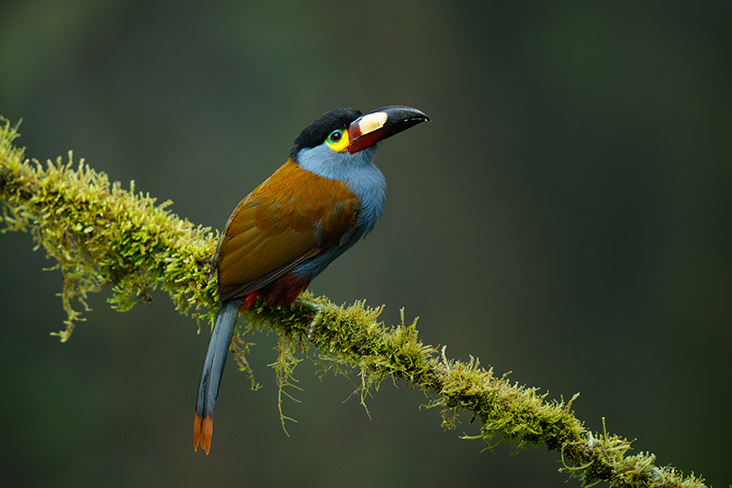 Awaiting us on the sixth day is Ecuador’s crown jewel of the cloud forest — the striking Plate-billed Mountain-Toucan. © Jorge Luis Cruz Alcivar
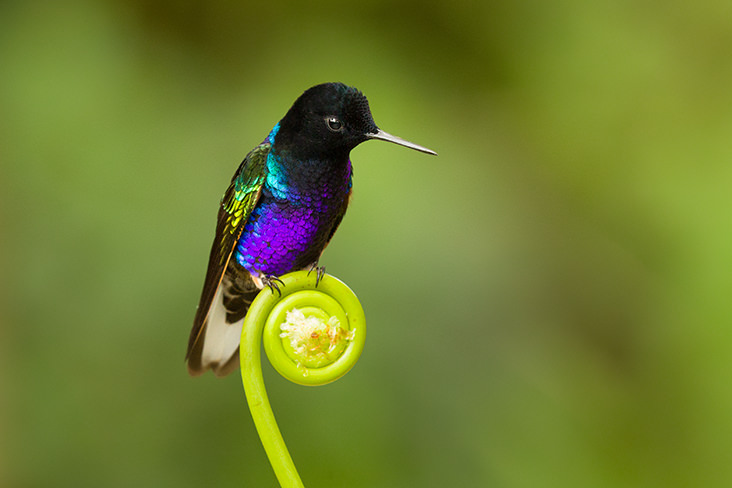 The Velvet-purple Coronet, also known as the Seven-colored Hummingbird, glides like a liquid gemstone — iridescent, rare, and utterly mesmerizing. © Jorge Luis Cruz Alcivar
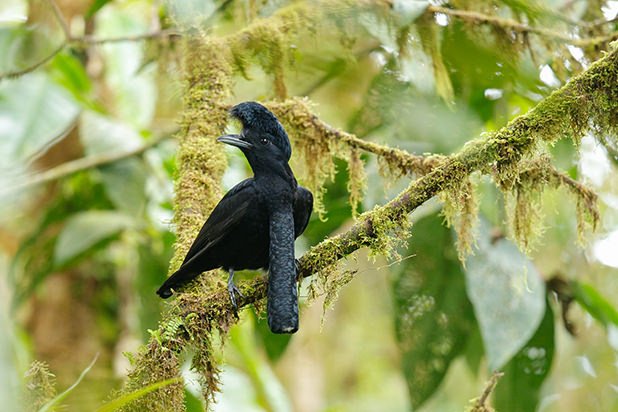 Few birds in Ecuador are as strange and captivating as the Long-wattled Umbrellabird. © Jorge Luis Cruz Alcivar
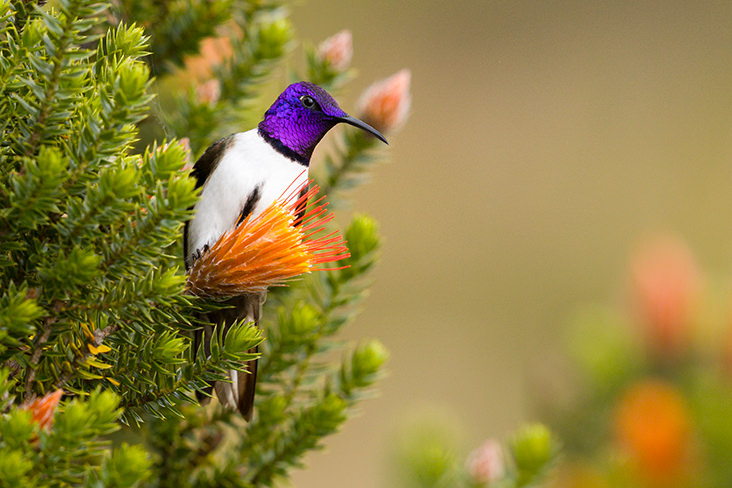 The Ecuadorian Hillstar, a highland gem — radiant and unforgettable. © Jorge Luis Cruz Alcivar
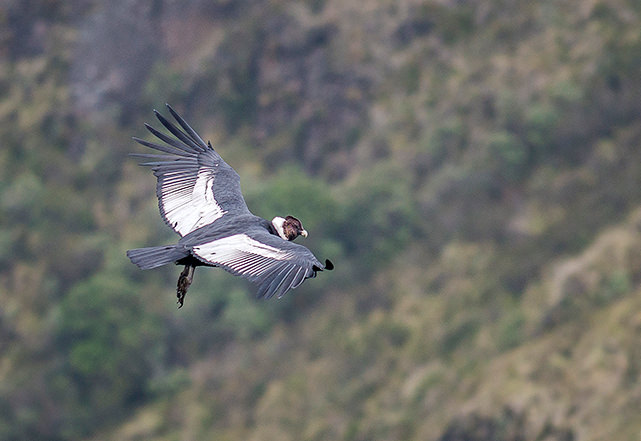 The enourmous Andean Condor is the main focus of our trip to Antisana © Luis Alcivar